
Key Takeaways
- A chalazion is a firm, painless bump on the eyelid caused by a blocked oil gland, not an infection.
- Warm compresses applied a few times daily are the first step in at-home care.
- Never squeeze or try to pop a chalazion.
- Recurring bumps can point to an underlying eyelid condition worth checking with an optometrist.
- Simple daily habits like eyelid cleaning and removing makeup can help prevent them from coming back.
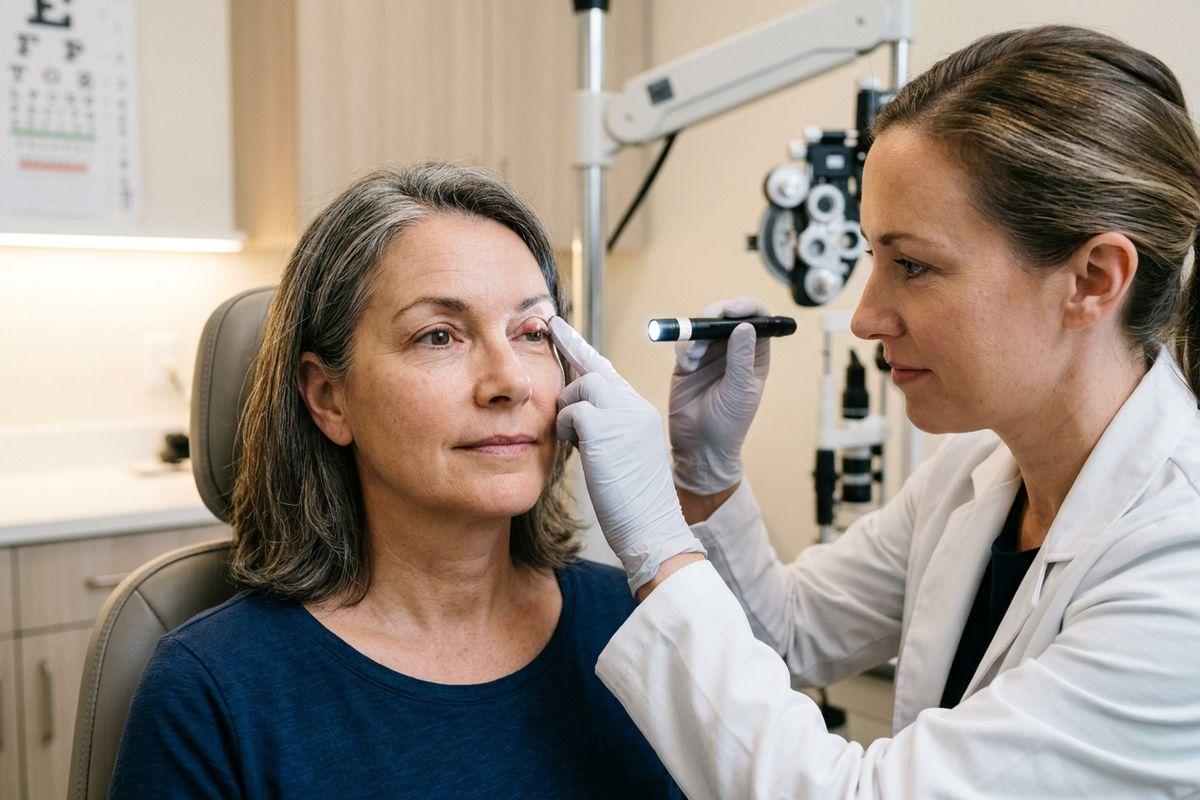
One day, you notice a small, firm lump on your eyelid. It doesn’t hurt, but it’s quite eye-catching, and it doesn’t seem to be going away. That’s often the first sign of a chalazion, and at Upper Richmond Optometry, we’re here to help you understand what it is and how to treat it.
A chalazion is a painless bump that forms when one of the small oil glands in your eyelid gets blocked, causing trapped oil to build up inside the lid tissue. It’s not an infection, and it’s not contagious, but it can sometimes resemble other eyelid problems. If you’re unsure what’s going on, scheduling a comprehensive eye exam is a practical first step.
What Is a Chalazion?
Your eyelids contain tiny glands called meibomian glands, and they produce oil that keeps the surface of your eye comfortable and moist. When one of those glands gets clogged, the oil backs up and forms a small, round lump deeper in the lid tissue, called a chalazion.
Chalazion vs. Stye
These 2 problems can look similar, but they’re very different. A stye is caused by a bacterial infection and is painful, red, and sits right at the edge of your eyelid. A chalazion grows more slowly, sits deeper in the lid, and usually doesn’t hurt.
One thing to keep in mind is that a stye that doesn’t clear up can eventually turn into a chalazion. So if you’ve had a sore eyelid bump that seemed to heal but left a firm lump behind, that may be what happened.
Signs and Symptoms to Watch For
Most chalazions are easy to spot once you know what to look for. Common signs include:
- A firm, painless lump on your upper or lower eyelid
- Mild tearing or a feeling of irritation in the eye
- Slightly blurred vision if the bump is pressing on the surface of your eye
The blurred vision part tends to surprise people. If the bump is large enough, it can put gentle pressure on your cornea, which temporarily changes how you see. The blurriness usually clears once the chalazion goes away.
Why You Might Get a Chalazion
Common Risk Factors
Some people are more prone to chalazions than others. For example, conditions that affect eyelid health or skin oil production can play a role. These include:
- Chronic eyelid inflammation, known as blepharitis
- Skin conditions like acne rosacea or seborrhoea
- Touching your eyes with unwashed hands
It’s worth noting that meibomian gland dysfunction is a closely related condition that can contribute to repeated chalazion episodes. If you’re getting these bumps regularly, that connection is worth exploring with an eye care provider.
Habits That Can Lead to a Flare-Up
Everyday routines matter more than people realize when it comes to eyelid health. Sleeping with eye makeup on is one of the more common habits that can clog oil glands over time. Old mascara or eyeliner that hasn’t been replaced in months can also introduce bacteria to the area around your lids and contribute to a backup of oil.
If you feel as though you’re constantly getting chalazions, it’s worth talking to an eye care provider about what might be going on underneath the surface.
How a Chalazion Is Treated
At-Home Care First
Most chalazions respond well to simple at-home treatment. The go-to approach is to hold a warm compress against the closed eyelid for 10 to 15 minutes, usually about 4 times a day. The warmth helps soften the blocked oil so it can drain on its own. Warm compresses work by loosening thickened oil in blocked glands, making them a reliable starting point before any other treatment.
One rule that applies no matter how tempting it gets: Don’t squeeze it. Trying to pop a chalazion the way you would a pimple can push the blocked material deeper into the tissue and make things worse.
When to See an Eye Doctor
If the bump hasn’t improved after a few weeks of consistent home care, it’s time to see an eye care professional. Depending on your situation, treatment may include referral for a steroid injection or a minor procedure to drain the chalazion.
Our team at Upper Richmond Optometry also offers dry eye therapy and eyelid health treatments that can address the underlying gland issues often connected to chalazion recurrence.
How to Prevent a Chalazion from Coming Back
Simple Daily Habits That Help
Prevention often comes down to consistent daily care. A few habits that support healthy eyelids:
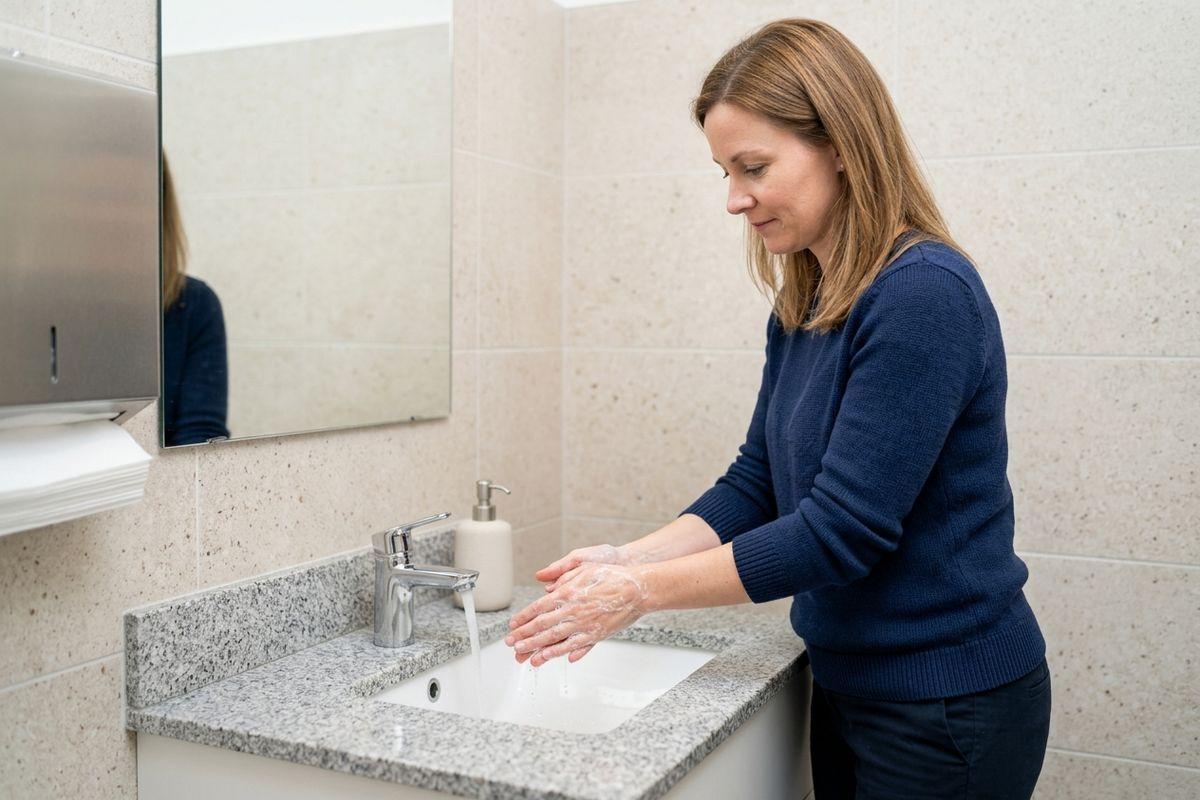
- Wash your hands before touching your eyes or handling contact lenses
- Gently clean your eyelids daily, especially along the lash line, to keep oil glands clear
- Remove all eye makeup before going to sleep
How an Eye Doctor Can Help
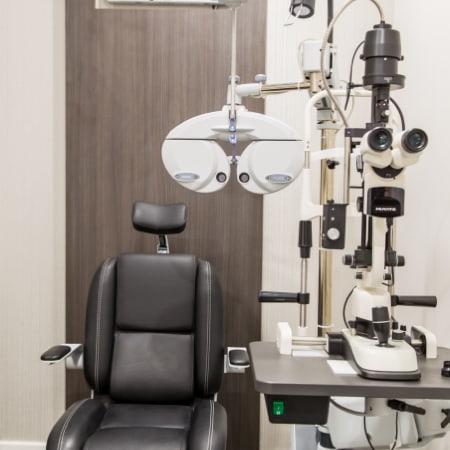
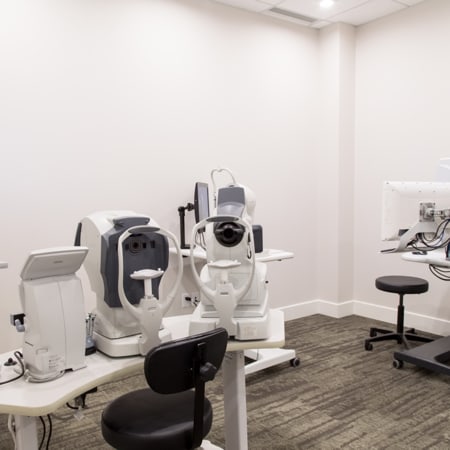
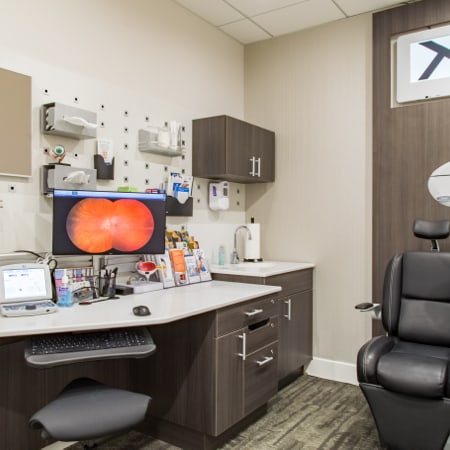
At Upper Richmond Optometry, we can assess your eyelid health as part of a comprehensive exam and help you figure out what’s driving the pattern. Regular eye exams in London, Ontario are one of the more practical ways to catch these kinds of issues before they become a recurring problem. A comprehensive eye exam goes well beyond checking your prescription and can identify eyelid and gland conditions that might otherwise go unnoticed.
Schedule Your Appointment
We offer comprehensive eye exams and personalized eyelid health assessments for patients of all ages. If a chalazion has been bothering you, or you keep getting them, reach out to our team in London and Arva, ON, to book an appointment and get a clearer picture of your eye health.