
Key Takeaways
- High blood pressure can damage the tiny blood vessels inside your eyes, often without early warning signs.
- Symptoms like blurred vision or sudden changes in sight may point to blood pressure-related eye damage.
- Hypertensive retinopathy is the most direct form of eye damage caused by uncontrolled high blood pressure.
- A comprehensive eye exam can detect signs of blood pressure damage, often before you notice any symptoms.
- Regular eye exams for patients in North London and Arva can support both vision and overall health.
You might not feel anything different. No headache, no blurry moments, nothing that makes you stop and think something is wrong. That’s what makes high blood pressure and eye health such a tricky combination. The damage can happen quietly, deep inside your eye, long before you notice anything is off.
Yes, sustained or severely elevated blood pressure can damage the retina and, in serious cases, threaten vision. The eyes rely on a network of tiny blood vessels to function. When blood pressure stays high over time, those vessels take the strain. They can stiffen, narrow, or leak, and that puts your retina and optic nerve at risk. Upper Richmond Optometry provides comprehensive eye exams that look beyond your prescription to assess the health of those vessels directly.
Vision Symptoms Linked to High Blood Pressure
What You Might Notice
Sometimes the first sign is subtle. You might assume you need a new glasses prescription, or that you slept badly. But certain changes are worth paying attention to, especially if you already know your blood pressure runs high. These can include:
- Blurred or distorted vision that wasn’t there before
- Sudden changes in how clearly you see, even briefly
- Vision that seems noticeably worse in one eye compared to the other
What Happens Inside the Eye
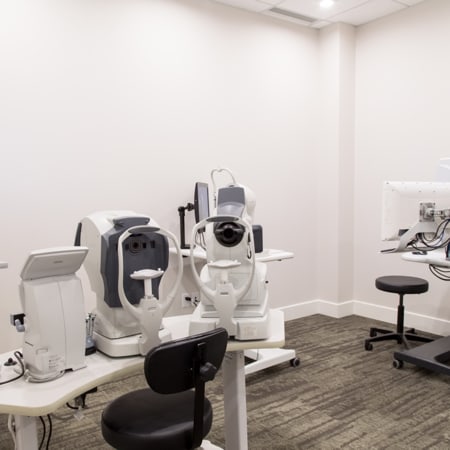
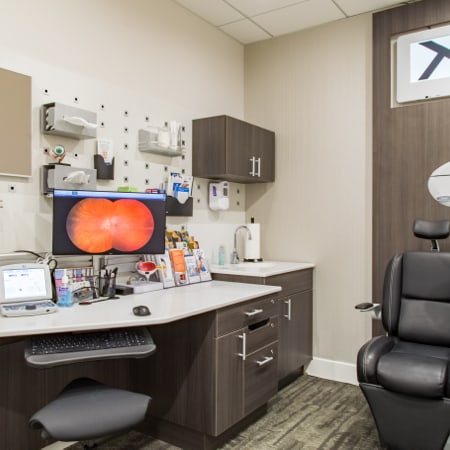
Sustained high blood pressure can cause retinal blood vessels to narrow, leak, or bleed. In severe cases, swelling can affect the retina or optic nerve. These changes may be present before vision symptoms develop. Retinal imaging is one of the tools optometrists use to get a closer look at these changes inside the eye.
Eye Conditions Tied to High Blood Pressure
Hypertensive Retinopathy
This is one of the most direct consequences of uncontrolled blood pressure on your eyes. Hypertensive retinopathy refers to damage to the retina caused by sustained high pressure in the blood vessels that feed it. It often develops without noticeable symptoms in its early stages, which is one reason routine health and eye care matter.
Other Related Eye Conditions
High blood pressure is also associated with a higher risk of some vascular and optic nerve problems. Glaucoma is a separate group of diseases that damages the optic nerve and is not diagnosed from blood pressure alone. Researchers have also studied possible associations with macular degeneration, which affects the central part of your vision used for reading and recognizing faces.

What an Eye Exam Can Reveal About Your Health
Here’s something many people don’t realize. The blood vessels inside your eye are the only ones in your body that can be viewed directly without surgery. That makes a comprehensive eye exam a genuinely useful window into your overall health. In fact, eye exams can reveal signs associated with many systemic health conditions, including high blood pressure and diabetes, making them far more than a simple vision check.
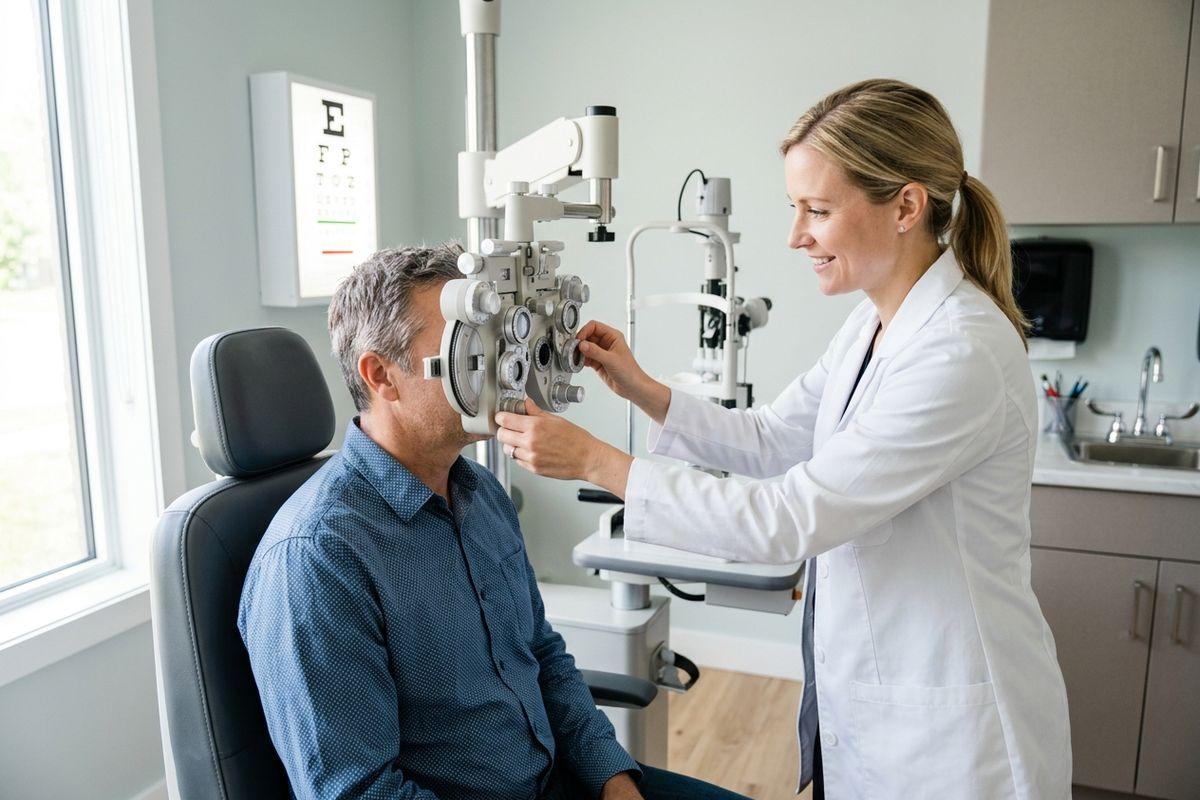
During an exam, your optometrist can examine your retinal blood vessels for signs of pressure-related damage, such as narrowing, leaking, or swelling. These changes can appear before you develop any symptoms and sometimes before a blood pressure problem is even diagnosed. A change the eye doctor spots in your eye might be the reason your family doctor investigates further.
How Regular Eye Exams Support Your Overall Health
A comprehensive eye exam checks far more than whether you need a new glasses prescription. For patients in North London and Arva, regular eye care is one practical part of protecting long-term vision. Adults with high blood pressure should follow their medical care plan and keep the eye-exam schedule recommended for their individual risk.
Signs It’s Time to Book an Exam
Don’t wait until something feels seriously wrong. These situations are good reasons to schedule a visit sooner rather than later:
- Any sudden or gradual changes in your vision
- A known history of high blood pressure, even if it’s being managed with medication
Take Care of Your Eyes Today
At Upper Richmond Optometry in Arva, our team provides comprehensive eye exams for patients from North London, Arva, and surrounding communities. If you have high blood pressure or you’ve noticed any changes in how you see, booking an eye exam is a straightforward next step. Reach out to our team to schedule your visit and take a closer look at what your eyes might be telling you.