
You might think about the traits you inherit from your family, like your eye colour or the shape of your smile. It’s also natural to wonder if health conditions are passed down through generations. The team at Upper Richmond Optometry can help you explore your family’s health history, which is an important piece of the puzzle for conditions like age-related macular degeneration (AMD).
Yes, your family history can play a significant role in your risk for macular degeneration, though it is not the only factor. Genetics can make you more susceptible to the condition, but lifestyle and environmental influences also have an impact on your long-term eye health.
What Is Macular Degeneration & How It Affects Vision
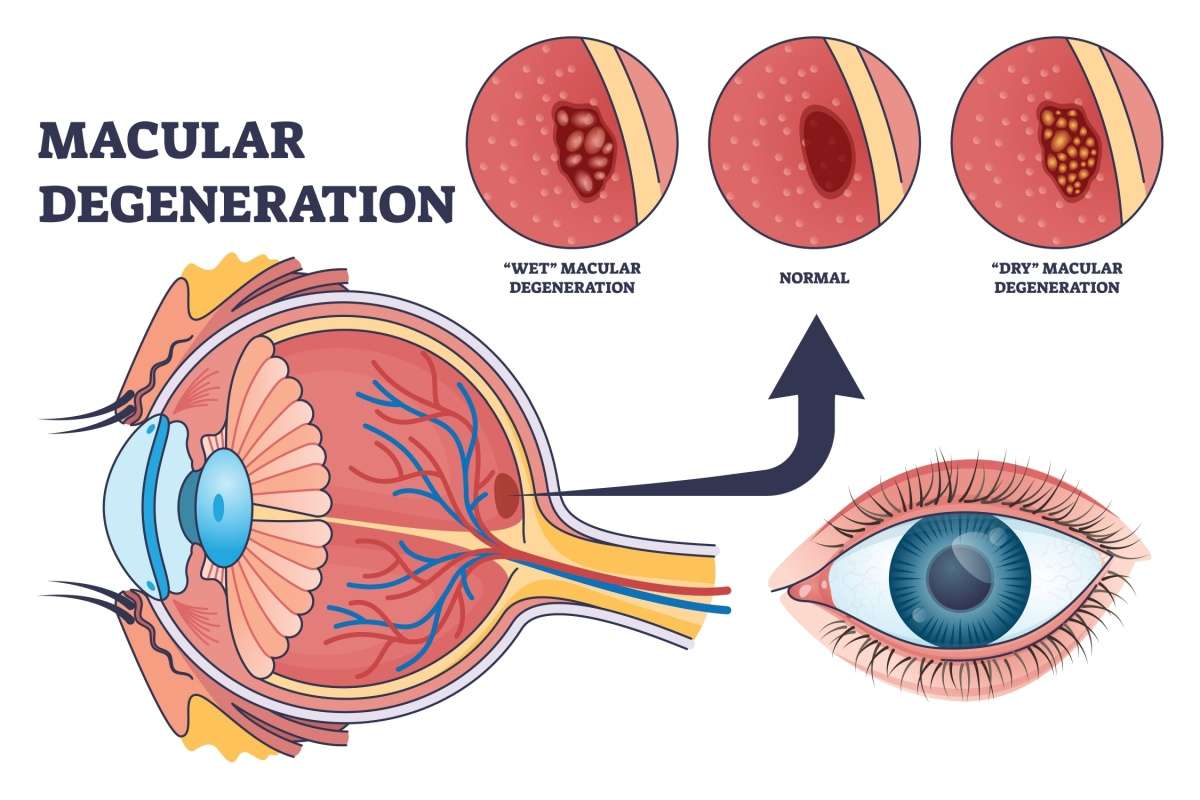
Macular degeneration is a condition that affects your central vision. It doesn’t cause complete blindness, but it can make it difficult to see fine details, whether you’re looking at a person’s face, reading a book, or trying to drive. Your peripheral (side) vision usually remains clear.
Your Macula & Your Sight
Think of your eye like a camera. The retina is the film at the back, and the macula is the small, central part of that film responsible for sharp, detailed images. When the macula is affected, the very center of your picture can become blurry or distorted, even while the edges stay in focus.
Two Forms of the Condition
There are two main types of AMD: dry and wet. The dry form is more common and typically progresses slowly over years as cells in the macula thin out. The wet form is less common but can cause more rapid vision changes when new, abnormal blood vessels grow behind the retina.
Family History & Your Genetic Connection
Your genes are the blueprint for your body, and they can influence your chances of developing certain health conditions. For macular degeneration, having a close relative—like a parent or sibling—with the condition means your own risk is higher than someone with no family history of it.
Why to Know Your Family’s Eye Health
Understanding your family’s health background gives you and your optometrist valuable information. It helps you become more aware of what to look for and allows your eye care professional to monitor your ocular health more closely as part of your overall eye disease management. This knowledge lets you take a more proactive approach to your vision care.
Genes & Increased Risk
Researchers have identified several genes associated with an increased risk for developing AMD. Having these genes doesn’t mean you will get the condition, it just means you have a genetic predisposition. This is one reason why a comprehensive approach to eye health is so important.
Other Factors That Can Influence Eye Health
While you can’t change your genes, you do have influence over other factors that affect your eye health. Your daily choices and environment contribute to your overall risk profile for conditions like macular degeneration.
Age & Your Eyes
Age is a significant factor for AMD. The condition becomes more common as you get older, which is why regular eye exams are a key part of health management for adults over 50. Monitoring your vision becomes even more important with each passing decade.
Lifestyle Choices & Vision
Your general health is directly connected to your eye health. For example, smoking harms the eyes and can reduce blood flow and introduce damaging substances. Similarly, a diet that lacks important nutrients can also affect the delicate structures within your eye over time.
Sun Exposure Over Time
Years of exposure to the sun’s ultraviolet (UV) light without proper protection can also affect your eyes. The UV rays can contribute to damage to the retina and macula, making protective eyewear more than just a fashion statement.

Signs to Notice & How It Is Detected
The early stages of macular degeneration may not have noticeable symptoms, which is why checkups are so useful. As it progresses, you might notice subtle changes in your central vision. Knowing what to look for can help you identify potential issues.
Changes in Your Central Vision
You might notice specific types of visual disturbances. Pay attention to changes such as:
- Straight lines appear wavy or distorted
- A blurry or dark spot in the center of your vision
- Trouble with detail when you read or look at objects
- Colours seem less bright than before
The Role of a Regular Eye Exam
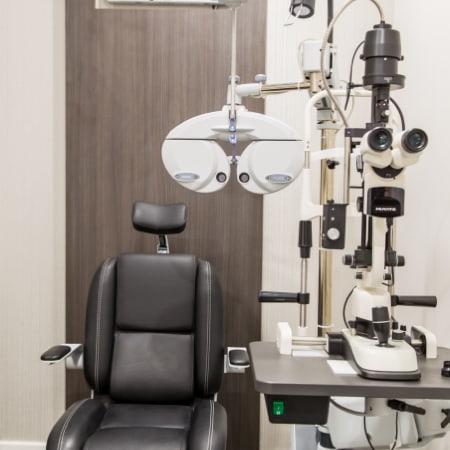
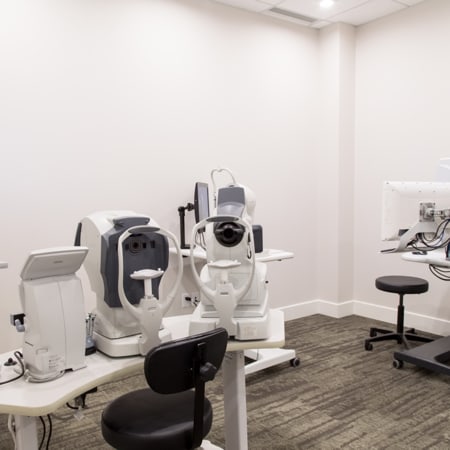
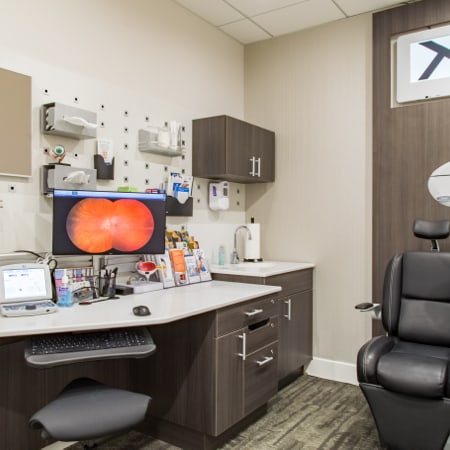
These changes are detected during comprehensive eye exams. An optometrist uses specialized equipment, like an OCT scanner, to look at the back of your eye, including the macula. This allows for early detection and monitoring long before you might notice symptoms on your own.
Support Your Vision Health & Plan Your Next Step
You can take simple, practical steps to support your eye health for years to come. By combining a healthy lifestyle with professional guidance, you can create a strong foundation for your vision.
Eat for Your Eyes
A diet rich in antioxidants, vitamins, and minerals can help protect your eyes. Include plenty of dark, leafy greens like spinach, colourful fruits and vegetables, and fish high in omega-3 fatty acids, such as salmon.
Protect Your Eyes from UV Light
Wear sunglasses that block 100% of UVA and UVB rays whenever you are outdoors. A wide-brimmed hat can also provide another layer of protection for your eyes and the sensitive skin around them, helping to prevent damage from UV light.
Schedule Routine Family Eye Care
Consistent, routine eye care is one of the most effective ways to look after your vision. Regular appointments establish a baseline for your eye health, making it easier for an optometrist in London Ontario to track any changes over time and offer personalized guidance.
Knowing your risk factors is the first step toward protecting your vision. The next is to work with a dedicated eye care team. At Upper Richmond Optometry, our team provides comprehensive eye exams to help you manage your ocular health and keep your vision clear.
Schedule your appointment to create a proactive plan for your sight.