
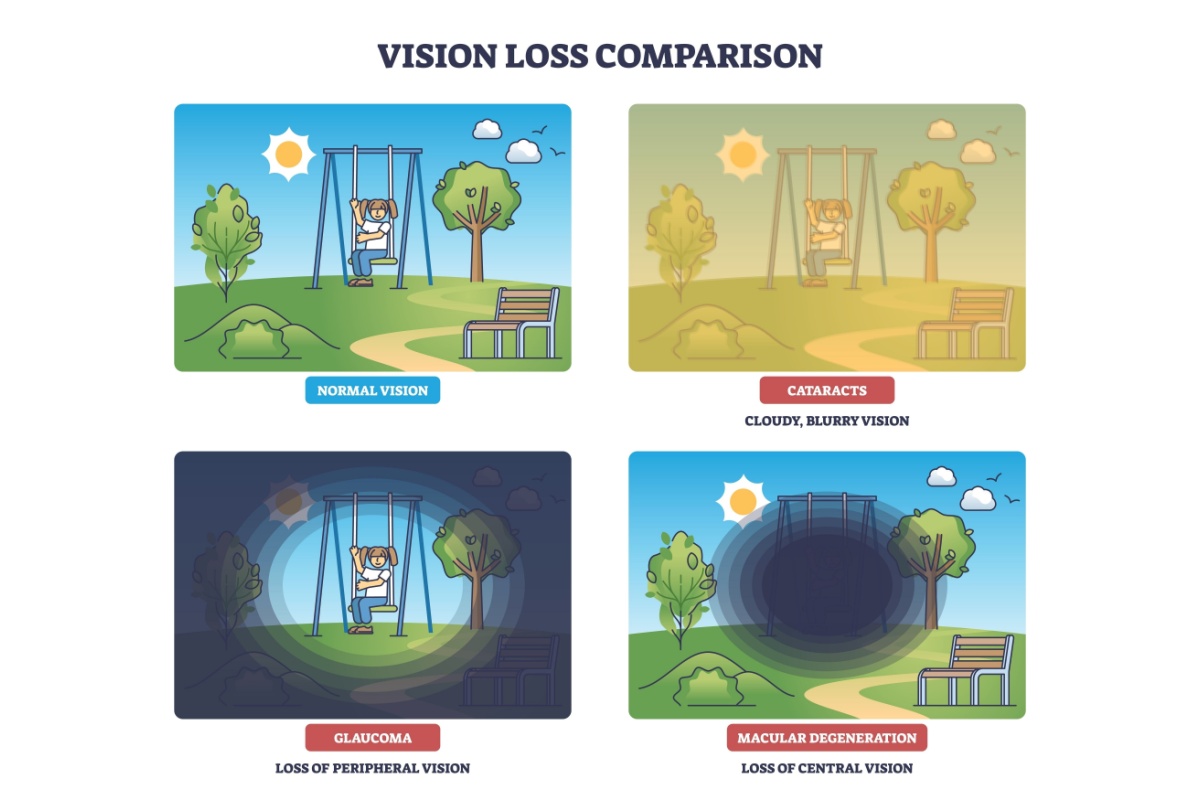
Early warning signs of macular degeneration include blurry or hazy central vision, straight lines appearing wavy or bent, difficulty reading despite adequate lighting, trouble recognizing faces from a distance, and dark or empty spots in your central vision.
These subtle changes often develop gradually, making them easy to miss until they significantly affect daily activities like reading or driving.
Catching macular degeneration early through comprehensive eye exams gives you the chance to slow its progression and preserve your remaining vision through proper treatment and lifestyle changes.
How to Spot Vision Changes Before They Progress
Your eyes often send subtle warning signals before macular degeneration becomes severe. You might notice that reading your favourite book requires you to squint or move the pages closer to your face than usual.
Central vision changes show up in different ways for each person. Your vision might become blurry or hazy when you look directly at objects, making it harder to see fine details clearly.
Straight lines can appear wavy or bent when you look at them. This happens when you’re reading text, looking at doorframes, or viewing tile patterns. Dark or empty spots may also appear in the center of your vision field, blocking parts of what you’re trying to see.
Daily Activities That Become More Difficult
Reading becomes one of the first activities affected by macular degeneration. You might find yourself turning on extra lights or moving closer to books, newspapers, or your phone screen to make out the words.
Recognizing faces becomes challenging, especially when people are standing more than a few feet away. You can still see that someone is there, but their facial features appear unclear or distorted.
Your eyes take much longer to adjust when you move from bright sunlight into a dimly lit restaurant or movie theatre. This adaptation process, which used to happen quickly, now leaves you feeling disoriented for several minutes. If you experience these vision changes, an eye exam can help determine whether macular degeneration is affecting your daily activities.
Your Risk Factors & When to Worry
Age & Family History Connections
Adults over 50 face a higher risk of developing macular degeneration as the delicate tissues in their retinas naturally age over time. Your risk increases significantly with each decade after you reach this milestone age.
Family history plays a major role in determining your likelihood of developing this condition. If your parents, grandparents, or siblings have experienced macular degeneration, your chances of developing it increase considerably.
Lifestyle Factors That Matter
Smoking greatly increases your risk by reducing blood flow to the retinal tissues that need proper circulation to stay healthy. The chemicals in cigarettes can also damage the small blood vessels in your eyes, as detailed in research on smoking and eye health.
High blood pressure creates complications by affecting the tiny blood vessels that supply your retina with nutrients and oxygen. When these vessels become damaged, your macular health suffers as a result.
Carrying extra weight may speed disease progression by contributing to inflammation throughout your body, including in your eye tissues. Maintaining a healthy weight supports better circulation to your retinas.
The Difference Between Dry & Wet Forms
Dry Macular Degeneration Signs
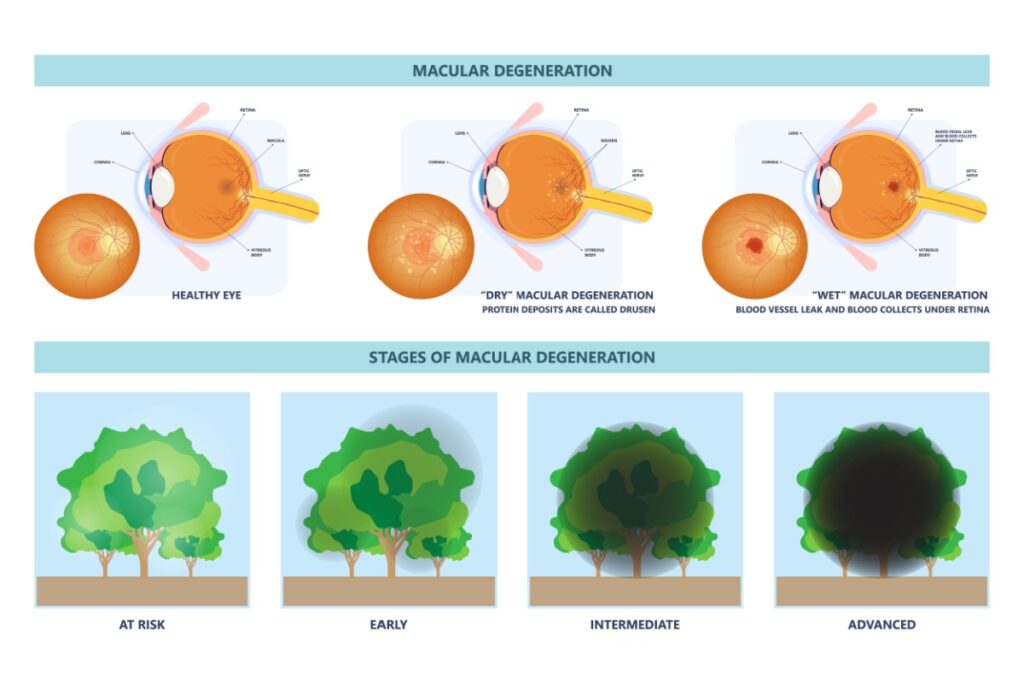
Dry macular degeneration develops gradually over months or years, causing your central vision to fade slowly without dramatic changes. You might not notice the vision loss at first because it happens so gradually.
Yellow deposits called drusen form under your retina as waste products accumulate in the eye tissues. These deposits interfere with your retina’s ability to function properly and process visual information.
Wet Form Warning Signals
Wet macular degeneration can cause sudden, severe vision changes that develop within days or weeks rather than years. You might wake up one morning and notice that your vision has changed dramatically overnight.
Straight lines appear bent, wavy, or distorted because abnormal blood vessels are leaking fluid under your retina. Large blind spots can develop quickly in the center of your vision, blocking significant portions of what you’re trying to see. These symptoms require immediate emergency eye care to prevent permanent vision loss.
When to Schedule Your Eye Exam in London, Ontario
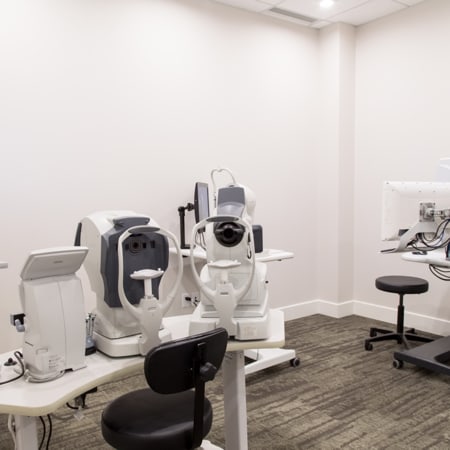
Annual comprehensive eye exams after age 50 help catch macular degeneration in its early stages, when treatment options can be most effective. These regular checkups allow your eye care professional to monitor changes in your retinal health over time using retinal imaging technology.
You should schedule an immediate appointment if you notice any vision distortions, such as wavy lines or new dark spots in your central vision. These changes can indicate that wet macular degeneration is developing and requires prompt attention.If you’re over 50, have a family history of macular degeneration, or notice any vision changes like wavy lines or central blur spots, schedule a comprehensive eye exam at Upper Richmond Optometry.
We’ll screen for early signs of AMD using advanced retinal imaging and create a monitoring plan to help preserve your vision.